Can You Install BFM® Spigots Without Welding?
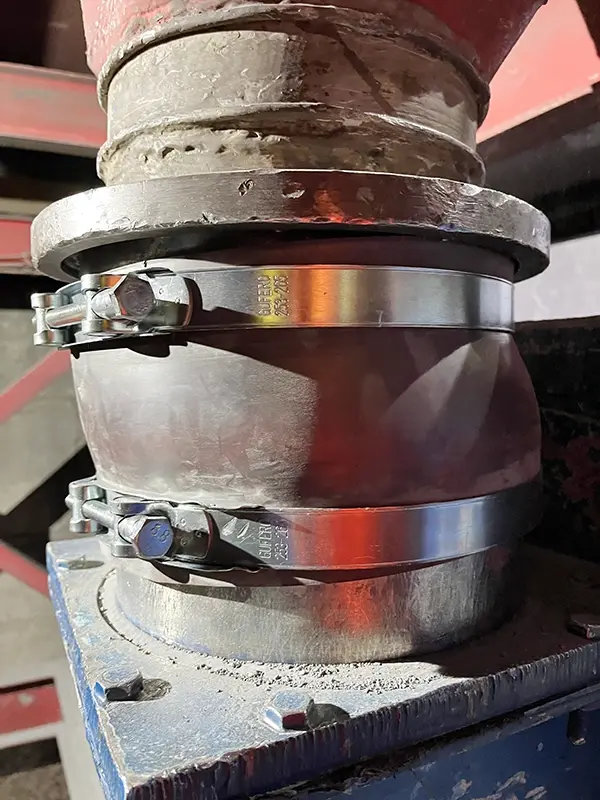
Yes. BFM® fitting systems can be installed without welding spigots directly onto existing process equipment. There are three main approaches:
- Lipped Spigots: Connect directly to compatible modular piping systems using existing quick-release clamps.
- Pre-welded Flanges or Ferrule Assemblies: BFM® spigots are welded to a suitable flange or ferrule in a workshop, allowing the completed assembly to be mechanically connected to process equipment on-site.
- Prefabricated Transitions: Incorporate BFM® spigots into custom-made transitions for square, rectangular or other non-standard connection points.
The best approach depends on your existing pipework, equipment configuration and installation requirements.
 Option 1: Use BFM® Lipped Spigots with modular pipework
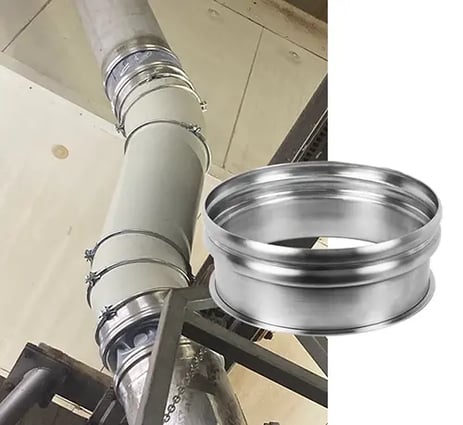
If your plant uses a modular piping system with quick-release clamps, such as JACOB tubing, a BFM® Lipped Spigot provides one of the simplest installation options.
Unlike a standard spigot, the Lipped Spigot has a pre-rolled 6 mm lip, allowing it to be connected directly to a compatible section of modular pipework using the existing clamping system.
That means there is no need to weld the BFM® spigot directly onto the pipe in the plant. Instead, it can simply be clamped into position, potentially allowing a BFM® connection to be installed and operational within minutes.
Lipped Spigots are particularly useful where:
-
Your plant already uses modular quick-release pipework
-
You want to minimise installation time
-
Equipment needs to be removed or reconfigured periodically
-
In-situ hot work is undesirable
Option 2: Pre-weld the spigot to a flange or ferrule
Even if you're not using modular piping, you can still avoid welding the spigot in-situ.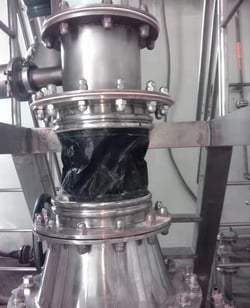 A standard BFM® Spigot can be pre-welded to a suitable ferrule or ANSI flange in a workshop, before being taken into the plant for installation. The completed assembly can then be mechanically connected to the process equipment during the installation or shutdown.
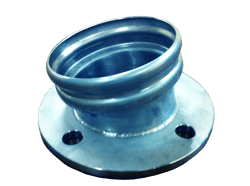
This approach moves the welding away from the production area and allows much of the fabrication work to be completed before a planned shutdown.
Depending on the application, fabricated arrangements can include sanitary ferrule ends or flange assemblies. BFM® distributors also offer customised spigot and transition arrangements where required.
For plants where access is limited or where hot-work requirements make welding during a shutdown difficult, prefabrication can be a very practical alternative.
Option 3: Prefabricate a transition for non-standard connections
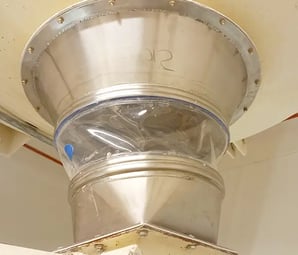
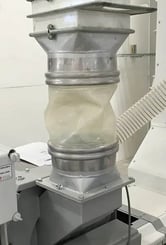 Not every connection point is conveniently round.
If you're installing BFM® onto equipment with a square, rectangular or other non-circular inlet or outlet, the connection can be adapted with a prefabricated transition, such as a square-to-round flange.
The BFM® Spigot can be incorporated into that fabrication before it reaches the plant, allowing the finished transition to be attached to the equipment as an assembly.
This can be particularly useful when retrofitting BFM® fittings to existing equipment where modifying the original machinery isn't desirable.
Whichever method you use, get the Installation Gap right
Changing the way you choose to install your spigots doesn't change one of the most important principles of a BFM® installation: the Installation Gap (IG) must be correct.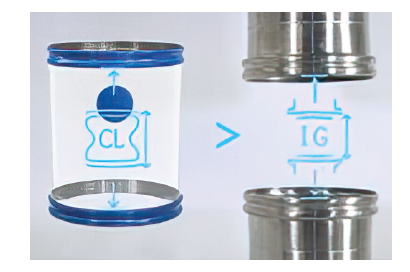 The Installation Gap is the space between the two BFM® Spigots. It will always be slightly shorter than the connector length and needs to account for factors such as offset, horizontal movement and, where applicable, vertical movement.
This applies whether your spigots are:
-
welded directly onto the equipment
-
installed using modular Lipped Spigots
-
attached to prefabricated flanges or ferrules
-
incorporated into a customised transition
Planning this correctly before fabrication helps ensure the BFM® Connector has the right fit and can perform as intended.
The BFM® fitting Installation Gap Calculator should always be used to help determine the correct dimensions before installation.
Plan first, install faster
Not wanting to - or being able to - weld a BFM® Spigot directly onto your equipment doesn't have to be a barrier to installing a BFM® fitting system.
There are ways to adapt the system to suit your existing plant and installation requirements - the key is to plan the connection method and Installation Gap before fabrication begins.
If you're not sure which approach will work best for your process, talk to your local Authorized BFM® Distributor. They can help determine the most appropriate installation method for your equipment and application.
You can also download our Installation Guidebook, which covers a wide range of installation how-tos and tips.