 One of the less visible but critical challenges for maintenance managers in bulk processing industries is managing spare parts and consumables.
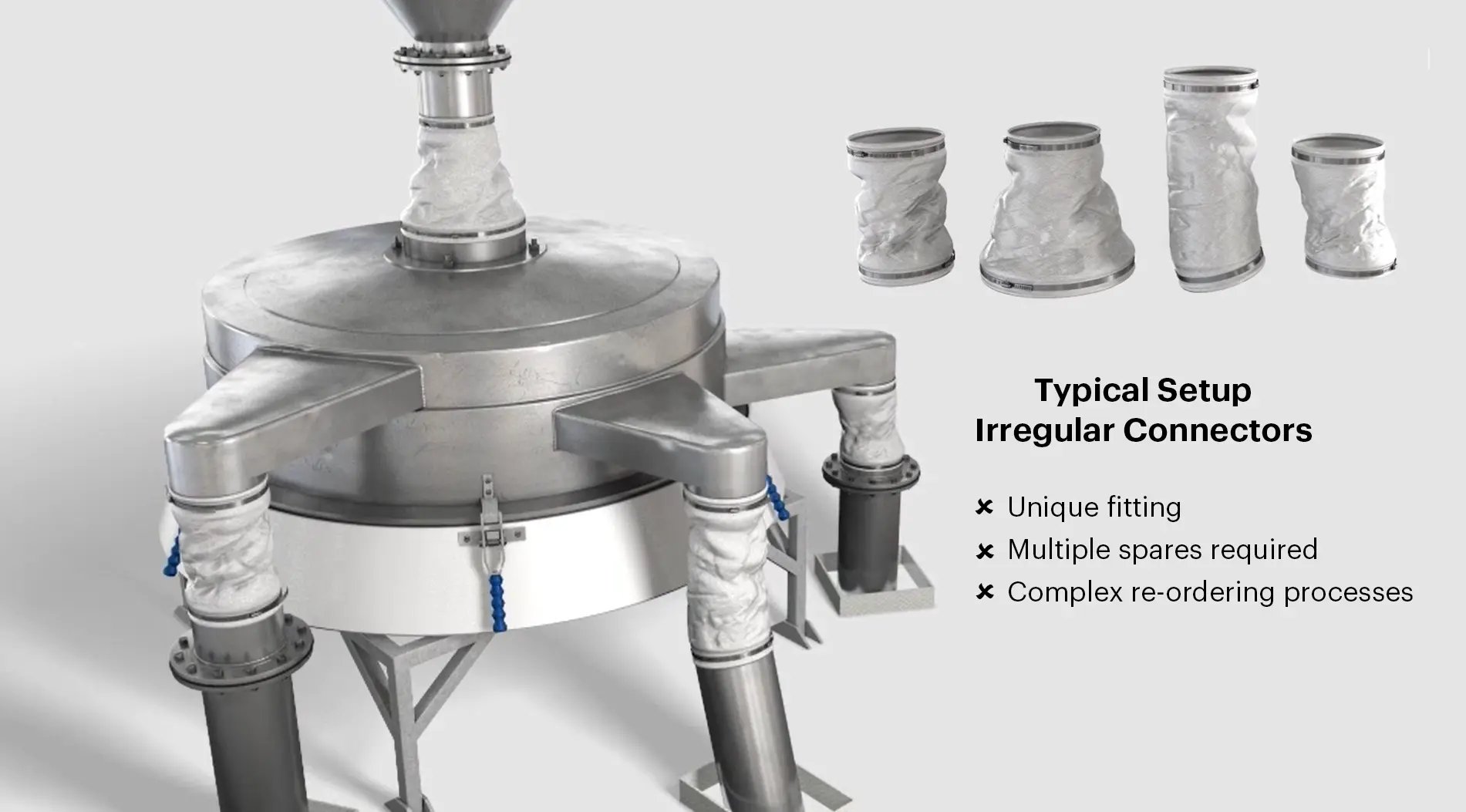
Flexible connectors—linking equipment such as sifters, mixers, hoppers, and cyclones—are essential for maintaining product flow, containing dust, and preventing contamination. However, ordering, stocking, and tracking them can quickly become a logistical headache. Variations in size, material, and assembly method often lead to overstocking, shortages, wasted time, and higher costs.
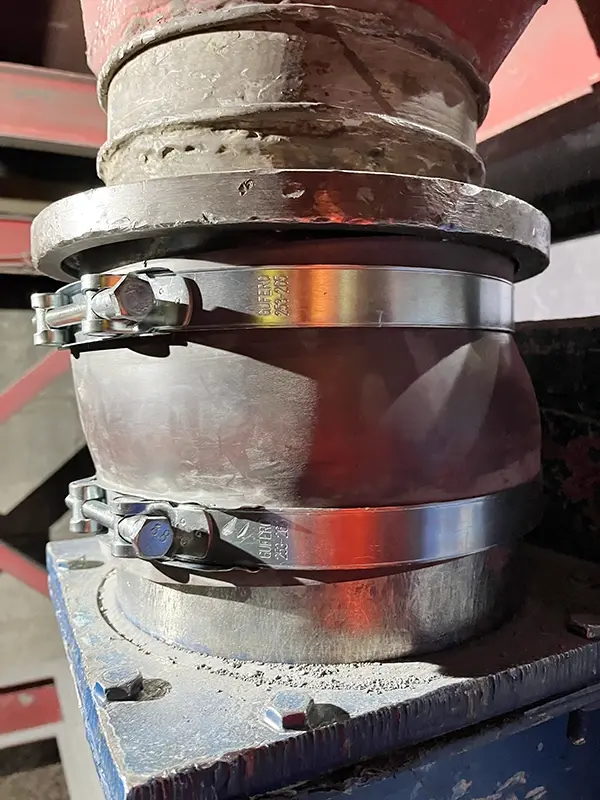
Much of this complexity stems from a lack of standardisation. Many facilities rely on “cut-and-clamp” connectors, where hose material is cut to length and secured with hose clips. While flexible, this approach creates a sprawling inventory: each connection may require slightly different lengths, diameters, materials, and clips. Managing these variants is costly, error-prone, and difficult to scale across sites.
Standardisation: Simplifying Inventory and Strengthening Supply Chains
Standardising flexible connectors transforms inventory management from a reactive scramble into a streamlined process. Fewer sizes and types simplify ordering, reduce storage requirements, and lower the risk of stockouts.
Consistency also improves maintenance efficiency. With uniform connectors, teams spend less time searching for parts and more time on essential tasks. Training and procedures become simpler because a single standard connector can serve multiple applications. Most importantly, downtime is reduced, and equipment is back up and running faster.
A Standardised Connector System: The BFM® Advantage
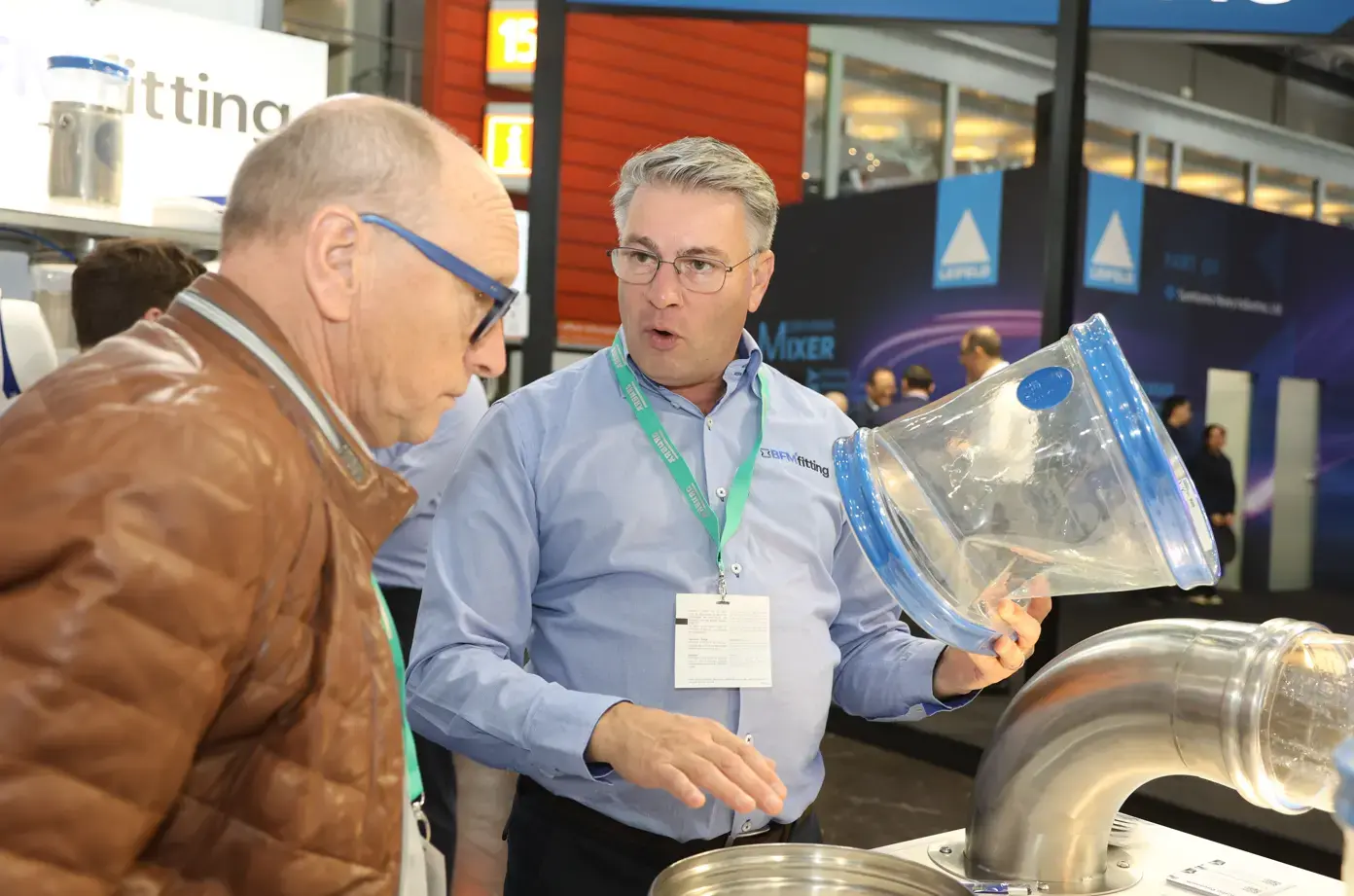
The BFM® fitting system offers a clear advantage over cut-and-clamp connectors. Precision-engineered with globally standardised sizing, each connector is designed to fit seamlessly with matching spigot pipe adaptors—eliminating the need for hose clips or custom adjustments.
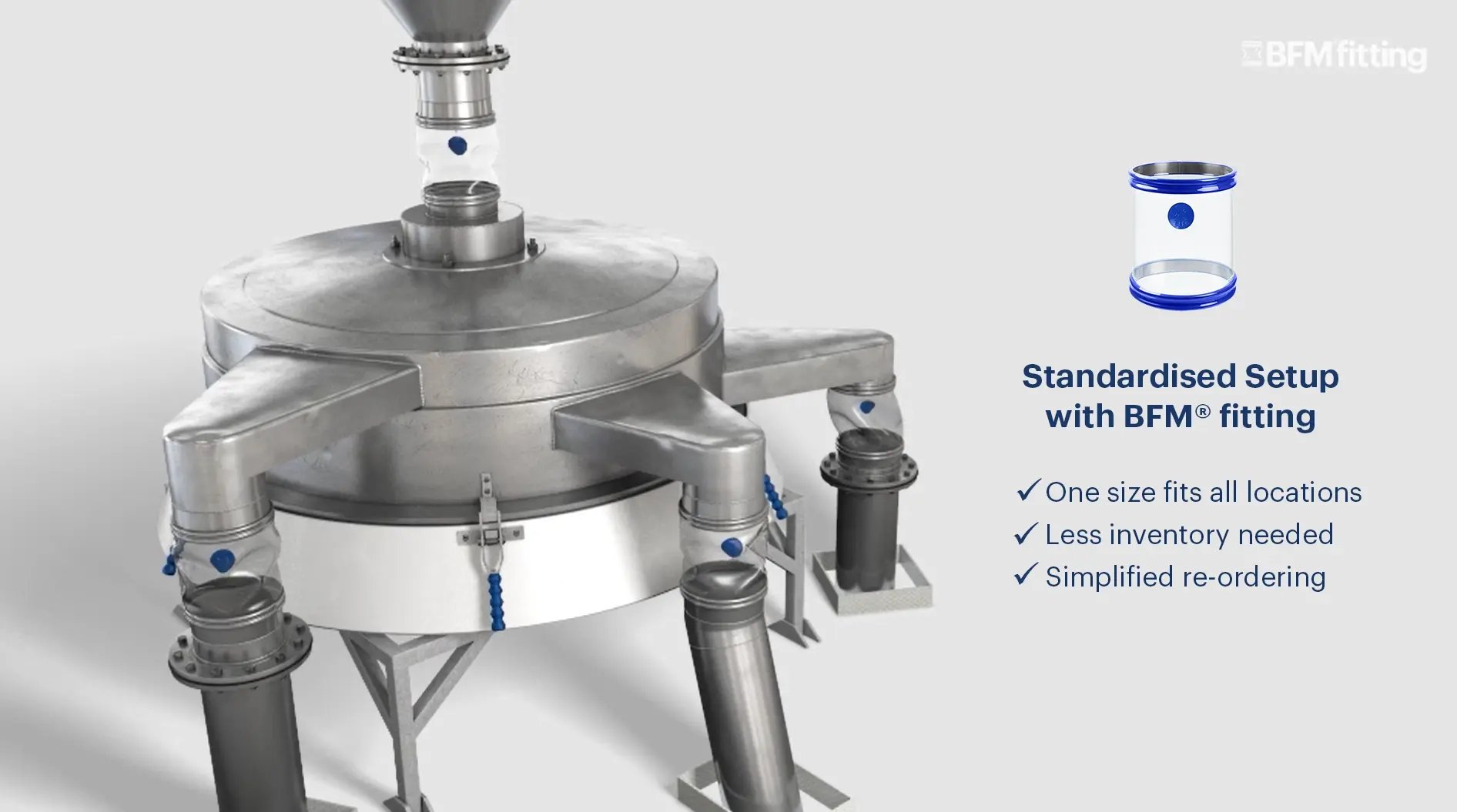
Key operational and sustainability benefits include: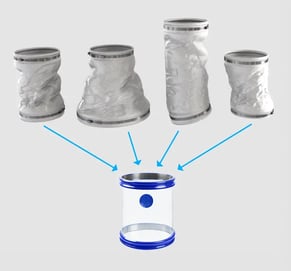
- Simplified Inventory – Fewer sizes reduce storage, simplify ordering, and improve predictability.
- Reliable Performance – Manufactured to exact specifications, reducing leaks, contamination, and product loss.
- Traceability and Compliance – Batch records support audits and regulatory requirements.
- Maintenance Efficiency – Quick, repeatable installation reduces downtime and errors.
- Global Supply Chain Sustainability – Standardised parts are interchangeable across plants and easier to source, avoiding bespoke production and excess shipping.
Sustainability in Practice
Sustainability extends beyond energy and materials to the supply chain itself. Cut-and-clamp connectors often result in waste from mismatched lengths, damaged clips, and premature disposal caused by installation errors. Standardised BFM® connectors reduce this waste by improving longevity, simplifying inventory, and minimising unnecessary transport.
The Seeflex range, made from a recyclable thermoplastic polyurethane alloy, further supports these efforts. The result is fewer parts produced, fewer resources consumed, and less waste sent to landfill—while also reducing total cost of ownership.
Transitioning to Standardisation
Moving to a BFM® standardised system can be phased in without disruption. Start by mapping connector points across your plant and identifying common diameters and materials to reduce variation.
Your local BFM® Distributor can help determine the most cost-effective standard sizes, enabling changes during planned maintenance.
Training is straightforward, with connectors designed for fast, repeatable installation—reducing errors, maintenance time, and compliance risk.
Adopting a standardised BFM® system reduces complexity, lowers costs, and improves efficiency, while future-proofing operations for greater resilience.
Standardisation isn’t just a logistical improvement—it’s a strategic step toward a safer, more efficient, and sustainable supply chain. With a global network of experienced Distributors, BFM® can support your transition every step of the way.
Learn more about improving efficiency with BFM® fitting.