In most processing plants, reliability programs concentrate on the big-ticket items. Pumps, motors, conveyors, valves, and bearings all receive careful attention through preventive maintenance schedules, vibration analysis, and condition monitoring.
Yet one of the simplest components in the process line is often ignored until it fails: flexible connectors.
Whether connecting sieves, hoppers, packaging machines, mixers, or conveying systems, flexible connectors are often regarded as inexpensive consumables. They are expected to wear out, split, or require regular replacement. But this mindset can create hidden costs that extend far beyond the price of the connector itself.
For maintenance engineers and plant managers focused on improving Overall Equipment Effectiveness (OEE), it's time to rethink the role of flexible connectors.
The Hidden Cost of "Just Replace It"
 When a flexible connector fails, replacing it rarely takes only a few minutes. A typical failure sequence often involves:
- Stopping production
- Executing lock-out and isolation procedures
- Removing product residue
- Replacing the connector
- Cleaning surrounding equipment
- Restarting and validating the process
Even a connector costing a small amount can generate thousands of dollars in lost production if replacement requires an unplanned shutdown. The direct replacement cost is often the smallest expense; the real impact lies in lost production time, labour, wasted product, additional cleaning, and disruption to production schedules.
Multiply this across dozens or even hundreds of connectors throughout a facility, and flexible connectors become a surprisingly significant contributor to maintenance costs.
Why Connectors Fail Prematurely
Many connector failures are blamed on "normal wear." However, repeated failures usually indicate that the connector is poorly matched to the application. Common root causes include:
.png?width=265&height=452&name=Badly%20Leaking%20Connector%20on%20Sifter%20(salt%20processing%20plant).png) Excessive movement or vibration
Excessive movement or vibration- Abrasion from abrasive product flow
- Incorrect connector length or twisting during installation
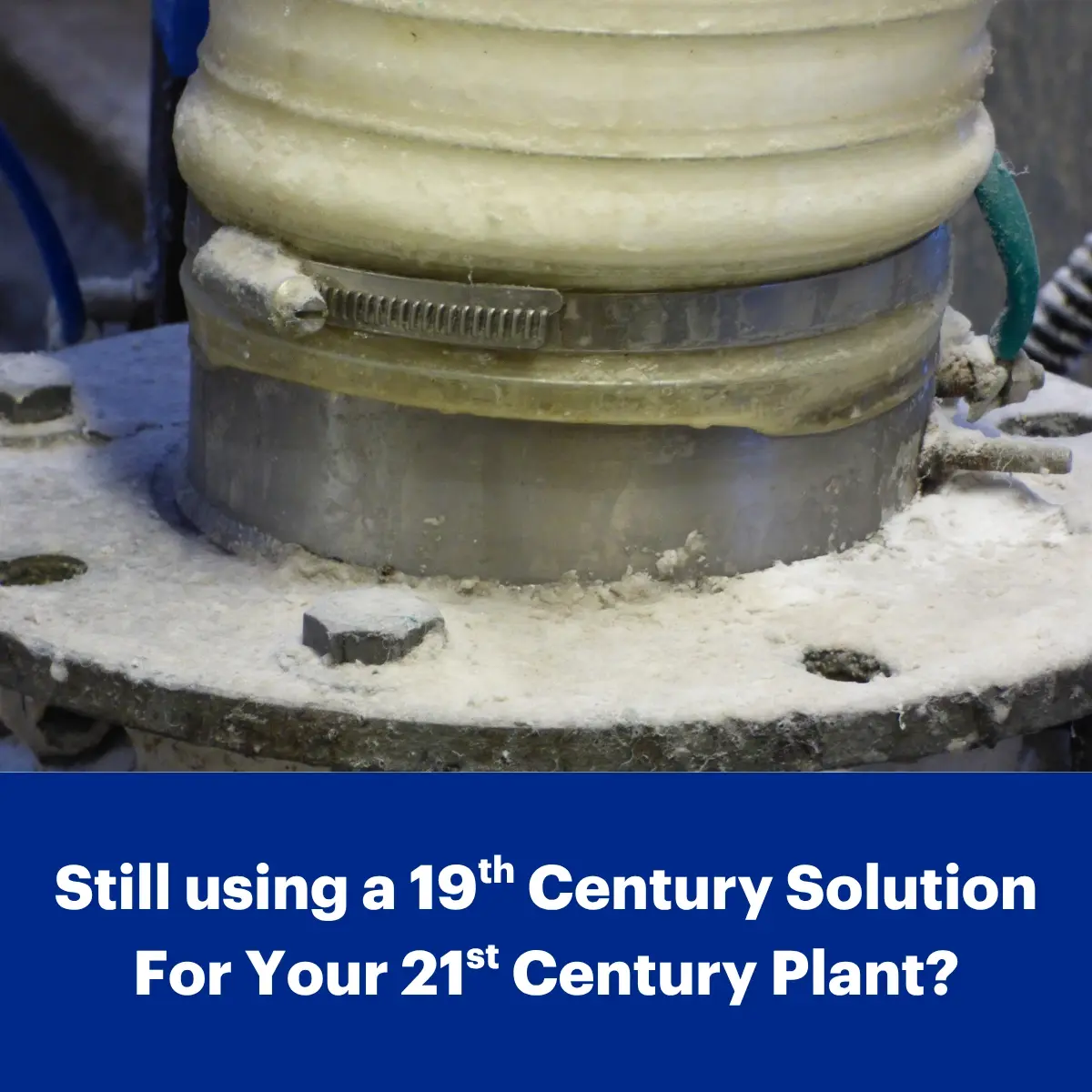
- Poor sealing causing product build-up
- Chemical degradation from aggressive CIP cleaning regimes
- Pressure cycling and temperature extremes
If maintenance teams continually replace the same connector every few months, they are treating the symptom rather than identifying the underlying cause. Reliability engineering starts by asking why failures occur—not simply accepting them as inevitable.
Reliability Starts with Design
Modern maintenance philosophies increasingly emphasise designing out recurring failures rather than managing them. Flexible connectors should be selected using the same engineering principles applied to bearings or mechanical seals.
Key Questions for Engineered Selection:
- Is the connector rated for the process pressure and temperature?
- Is the material chemically compatible with the product and cleaning agents?
- Does the design eliminate product build-up and dust leakage?
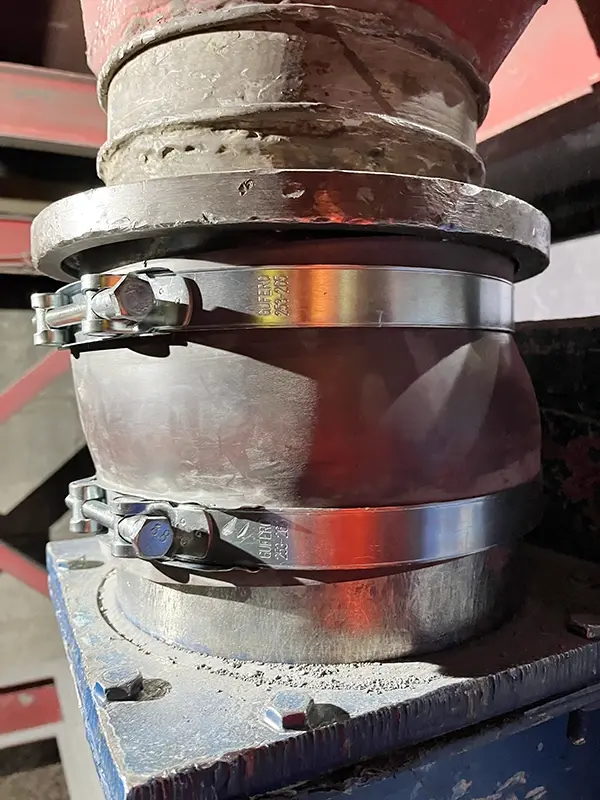
- Can it be installed consistently without relying on operator variables (like over-tightening band clamps)?
Choosing the right connector at the design stage significantly reduces maintenance interventions over the equipment's lifespan. Every maintenance intervention introduces risk—including incorrect installation, contamination by foreign material, product leakage, and operator injury. Reducing maintenance frequency isn't just about lowering costs; it's about reducing exposure to operational risk.
Maintenance Data Often Reveals the Problem
 Many Computerised Maintenance Management Systems (CMMS) record repeated work orders against the same equipment. However, connector failures are frequently grouped under "generic maintenance" tasks, meaning recurring issues remain hidden.
Maintenance managers can uncover quick wins by reviewing specific patterns:
- Which connectors are replaced most frequently?
- Which production lines experience repeated dust leaks or housekeeping issues?
- Where do operators report product leakage or difficult installations?
These patterns can identify chronic reliability problems that have quietly become accepted as normal operating conditions.
Thinking Beyond Purchase Price
Procurement decisions are often driven by initial purchase cost. However, total lifecycle cost tells a different story. A connector that lasts three or four times longer than conventional alternatives delivers substantial savings through reduced downtime and fewer maintenance interventions—even if its purchase price is higher.
Reliability-centred maintenance encourages organisations to evaluate components based on Total Cost of Ownership (TCO) rather than replacement cost alone. This philosophy applies just as much to flexible connectors as it does to larger mechanical assets.
 A Different Way to View Flexible Connectors
As manufacturing facilities continue pursuing higher OEE, lower operating costs, and improved sustainability, every component deserves consideration. Flexible connectors may be small, but their influence on uptime, cleanliness, and safety is often underestimated.
Rather than treating them as disposable consumables, forward-thinking maintenance teams are beginning to view them as engineered reliability components. Sometimes the biggest reliability improvements don't come from replacing major equipment; they come from eliminating the small, chronic failures that happen every day.
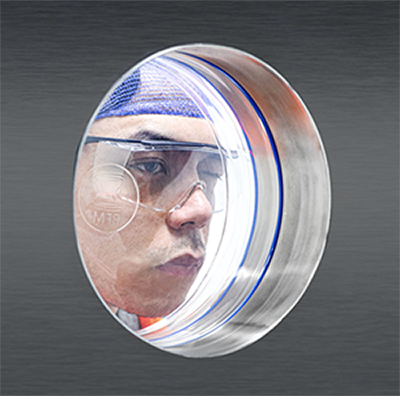
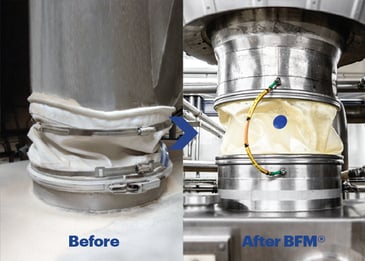
Transitioning to this engineered approach often starts with adopting modern, standardised sealing technology. Utilising advanced innovations—such as a snap-fit BFM® fitting system—allows plants to replace traditional, leak-prone hose clamps with a perfectly aligned, tool-free seal. By shifting the focus from constant maintenance to long-term containment integrity, plants can finally transform a notorious weak point into a predictable pillar of operational efficiency.
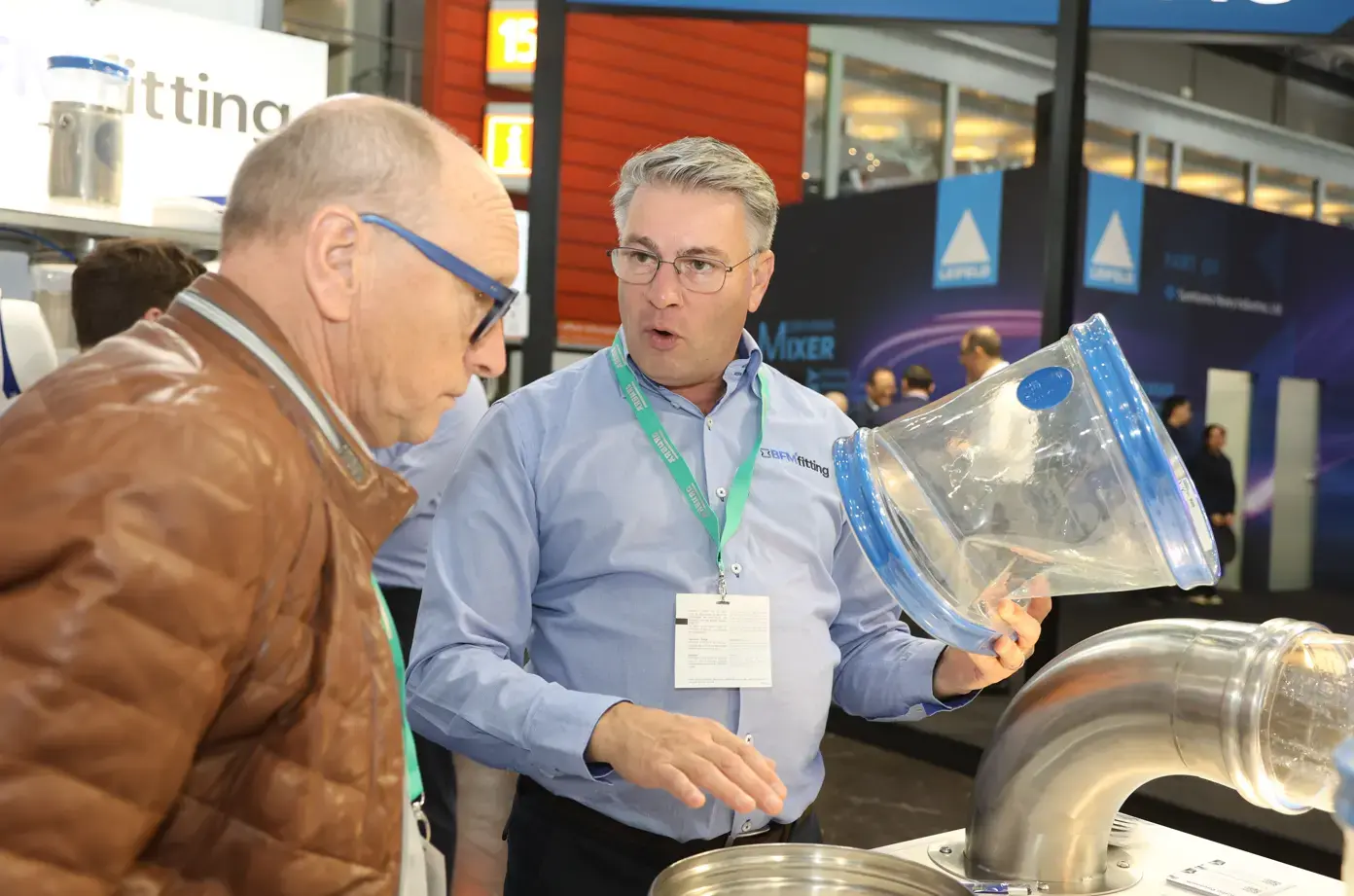
If you're looking to improve your overall operational efficiency, contact your local Authorised BFM® Distributor to see where a BFM® fitting system will be most effective at your plant.